
If you’ve ever found yourself Googling who invented work from home, you’re not alone. I had the same curiosity. Many people, including you, must assume it’s a recent concept born out of the digital age. In reality, the idea of working from home has a surprisingly long and fascinating history.
While the modern version of remote work is powered by Wi-Fi and Zoom calls, the roots go back centuries. Understanding how this concept has evolved can help us appreciate how far we’ve come and where we might be headed next. And I would really like to thank the one who invented work from home! Lol.
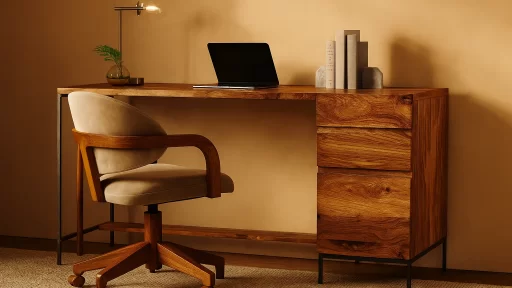
Let’s dive into the history, key moments, and future of remote work while uncovering who invented this lifestyle that now defines our work lives. So, pull up your comfy chair, sit at your favorite work station or work table, and enjoy the ride.
The Origins: Work from Home Before It Was Cool
Before anyone asked who invented work from home, people were already doing it. Working from home was the norm before the Industrial Revolution. Think blacksmiths, shoemakers, bakers, and farmers. These jobs were centered in homes or small workshops.
People used basic tools and tables as their work stations. Their homes doubled as their offices and production spaces. There was no commute, no office cubicle, and certainly no coffee machine in the hallway. It was pure home-based labor rooted in necessity.
This setup worked well for centuries. However, things began to change rapidly once the Industrial Age arrived.
The Industrial Revolution: Goodbye Home, Hello Factory
As factories emerged, people moved away from home-based work. Mass production required labor to be centralized. Workers now clock in at large industrial sites instead of their homes. This shift changed everything, literally. It pulled people into cities and a more rigid 9-to-5 schedule (yes, the one most of us are still stuck in).
The work table at home was replaced by a workbench in a noisy factory. The personal touch of home life faded into standard procedures and schedules. Yet, even during this transformation, a few professions still allowed for home-based work, such as sewing or writing.
Still, the question of who invented work from home hadn’t been asked yet, because for a while, the idea seemed outdated and impractical.
The Mid-20th Century: Remote Work Makes a Quiet Comeback!
Fast forward to the 1960s and 70s. With new technologies like the telephone and typewriter, the concept of telecommuting began to appear. Some professionals started doing a portion of their work at home. Writers, consultants, and architects could send documents by fax or mail and continue working without needing to be present in an office every day.
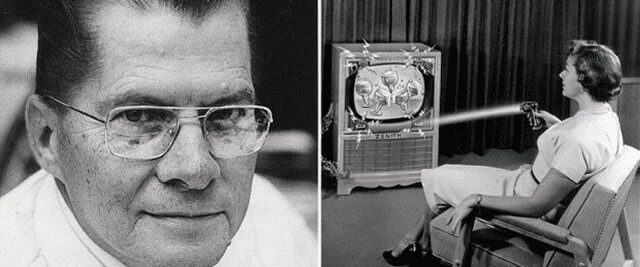
Then came Jack Nilles. A name you’ll want to remember!
He’s often credited when people ask who invented work from home. In 1973, Nilles coined the term “telecommuting” while working on a project for NASA. His idea was simple: “Instead of bringing people to work, bring work to the people”. Nilles laid the groundwork for what would later explode into the remote work revolution.
So, while he didn’t “invent” working from home, he formalized the concept and proved that it could be both efficient and productive.
The Computer Age: Remote Work Gets a Tech Boost
The 1980s and 90s brought a wave of personal computers, floppy disks, and later the internet. Suddenly, remote work became more than just a theory. People could now send emails, work on shared documents, and connect virtually with colleagues.
Companies like IBM started experimenting with remote work policies. In fact, by the late 1980s, IBM had thousands of employees working from home. They used early forms of intranet and dial-up connections to stay connected. At this point, the question of who invented work from home was less relevant than the realization that it could work on a larger scale.
By the 1990s, the rise of dot-com companies added fuel to the fire. These tech firms were more flexible and open to remote work, especially for developers, writers, and creatives. Still, many businesses remained hesitant.
The 2000s: The Digital Shift Accelerates!
In the early 2000s, broadband internet, laptops, and mobile phones made it easier to work from anywhere. New platforms like Google Docs, Skype (now retired), and Dropbox appeared, allowing real-time collaboration. More startups began offering remote positions, especially in tech and marketing.
Still, many corporate giants insisted on office culture. Even companies that pioneered remote work sometimes pulled back. IBM, for example, reversed its remote work policy in 2017, citing a need for closer collaboration.
But the tools kept improving. The average work station now includes a laptop, a second monitor, and an ergonomic chair. The work table transformed into a dedicated workspace with all the bells and whistles.
2020: The Pandemic That Changed Everything
No blog on the evolution of remote work is complete without mentioning COVID-19. In 2020, the global pandemic forced companies to switch to remote work almost overnight. Zoom calls replaced meetings. Slack became the new office hallway. Dining tables turned into work tables.
Even the most traditional companies were suddenly remote-first. And guess what? Productivity didn’t collapse. In many cases, it improved!
I completely transitioned from a full-time office employee to a work from home employee. The only good thing that came out of COVID-19.
Millions asked who invented work from home during this period, assuming it was a new concept. In reality, the situation simply pushed a long-brewing trend into the spotlight.
Post-Pandemic World: Hybrid Models and WFH Norms
Now, remote work is not just an option. It’s often an expectation. Many companies have shifted to hybrid models. Others have gone fully remote. Teams collaborate across time zones and continents without missing a beat.
Employees have upgraded their work stations, adding things like standing desks, large screens, and noise-canceling headphones. The humble work table has transformed into a customized, productivity-enhancing hub.
Moreover, remote-first companies like GitLab and Zapier have built their entire culture around working from home. They’ve shown that remote work is not just possible. It can be a competitive advantage.
The Benefits That Keep Remote Work Growing
The popularity of remote work is tied to real benefits. It saves time, reduces stress, and supports a better work-life balance. People no longer spend hours commuting. Instead, they reclaim that time for family, exercise, or creative pursuits.
Companies benefit too. They can access talent from anywhere. They save money on office space. And they often see increased job satisfaction among employees.
Even though not all jobs can be done remotely, the ones that can are increasingly staying that way. Employees are building better work stations at home. Employers are offering stipends to improve those setups. The work table is now part of a fully equipped mini office.
So, Who Really Invented Work From Home?
If we’re being technical, nobody invented it. It has always existed in some form. But if you’re looking for a modern figure behind the remote work movement, Jack Nilles deserves the credit.
His research and early advocacy laid the foundation for telecommuting. He showed that remote work could be just as effective as office work, even without today’s advanced tools.
But really, the story of who invented work from home is a collective one. It includes early craftsmen, forward-thinking technologists, and modern workers adapting to change. It’s a story of evolution, not invention!
Final Thoughts
Remote work is here to stay, and that’s for sure. The internet buzzes on and off about remote work being vanishing, but it’s not.
The journey from ancient workshops to digital offices has been long, but it shows no signs of slowing down. Whether you’re building your ideal work station or customizing a sleek new work table, you’re part of a centuries-long evolution.
So the next time someone asks who invented work from home, you can smile and say it’s a story that’s still being written.
Subscribe to What Works Next today and join a community dedicated to transforming the way we work. Working smarter starts here!