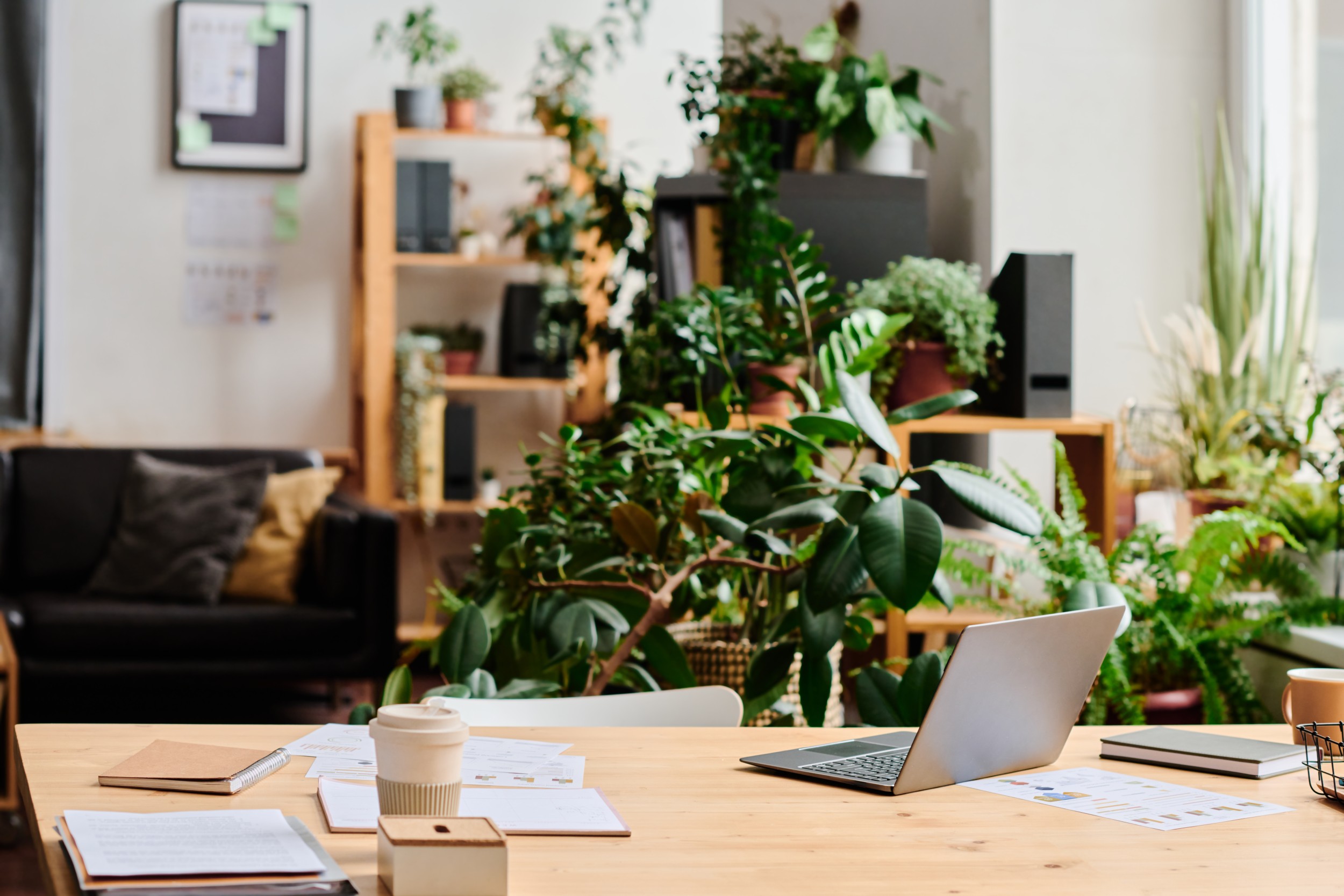
If you think home office plants are just “cute background for Zoom,” 2026 is going to change your mind. People now treat the home office like a daily performance space, not a temporary corner. They want calmer nerves, better focus, and a setup that feels human.
Greenery fits that demand because it nudges your brain toward safety, softness, and steady attention. And yes, the internet has opinions, but the science and trends now align in a way that makes plants feel less like decor and more like a strategy.
The 2026 Vibe Shift and Why We Stopped Optimizing for “Aesthetic”
Take a look at what people share online, and you will notice a pattern for home office plants followed by cozy desks, warm lighting, real textures, and plants everywhere. Homes in 2026 trend toward “joy-first” design, with more personalization and intentional corners that support mood and calm. That includes work corners.
This shift also connects to the bigger work story. Hybrid work and wellbeing now sit in the same conversation, and anxiety about harsh return-to-office policies keeps showing up in polls and headlines. When work feels uncertain, people try to control what they can. They start with the space in front of them.
What Biophilic Design Does to Your Brain
Biophilic design means you bring nature cues into built spaces. Think plants, daylight, natural materials, and views of greenery. The point is not “pretty.” The point is regulation.
Here is the simple human mechanism:
- Your brain gets exhausted. Screens, tabs, notifications, and tight deadlines drain it all.
- Nature cues and surroundings help in restoring it. Even short glimpses of “plants” within your working area can feel less demanding than digital stimuli.
- Your body downshifts. Stress drops when the environment feels safer and less sterile.
A 2024 study in Scientific Reports explored how nature exposure in workplaces connects with wellbeing, with vigor playing a role in the pathway. In short, nature cues can support the energy you need to show up as your best self.
The Productivity Angle People Love
Let’s talk outcomes, because your calendar does not care about vibes.
A University of Exeter research report widely cited from a real office field study found that adding plants to previously “lean” offices was linked with a 15% productivity increase. That is huge because it reframes greenery as performance support, not decoration.
Now, your home office is not a corporate floor plan. Still, the principle travels well: when you add living elements, you reduce “mental friction” and make it easier to settle into work.
This is also why a wellness workspace trend keeps expanding. People do not want a room that looks like a laptop storage unit. They want a room that helps them think.
The Air Quality Myth
Plants and air quality have a messy internet history.
- NASA’s older research showed plants can remove certain chemicals in controlled settings.
- But a later review and analysis found that typical potted plants do not meaningfully clean indoor air in normal buildings unless you use an unrealistic number of plants per area.
So what should you do with that?
Use plants for psychology, comfort, and attention. Use ventilation and filtration for air. When you separate these jobs, you win twice: you get the emotional benefits of greenery without expecting a jungle to replace an HVAC system.
Community Dialogue
If you read home office plant threads, you will see the same arc:
- “Look at my leafy desk sanctuary.”
- “Wait, how do I keep them alive while I work 10-hour days?”
- “Do I actually feel better, or do I just like how it looks?”
That tension matters because a plant setup only works if it stays easy. People do not quit plants because they hate nature. They quit because their setup creates guilt. You want the opposite: plants that reward you fast and forgive you when life gets busy.
The 2026 Playbook
If you want a real productivity boost, treat your plants like part of your workflow design.
1. Use “visual anchors” to reduce screen fatigue
Put one medium plant in your primary line of sight, but not blocking the monitor. Your eyes need a resting point that feels alive. This tiny change can lower the urge to tab-hop.
Where it works best:
- next to your main monitor.
- behind your laptop at a slight angle.
- near a window, so the plant looks more vivid.
- Or as you may like it.
2. Build a two-plant routine, not a twenty-plant fantasy!
Start with two plants you can keep alive. Earn your way up.
A simple rule:
- One “I forgive you” plant (could be a low-maintenance one)
- One “I make you happy” plant (the one that you resonate with and can take care of like your own daily)
That combo keeps your wellness workspace feeling alive without turning care into a second job.
3. Pair plants with light, not with willpower
Plants struggle in dark corners. Humans struggle in dark corners, too. In 2026, home wellbeing trends keep pushing better lighting and calmer zones, because light changes mood fast.
If your desk has low natural light:
- Move the plant closer to the window.
- Or choose plants that tolerate shade better.
- Or add a simple grow light on a timer.
4. Design “micro-breaks” around care
Plant care can become a ritual that interrupts stress spirals. You can water or mist during your first break, not at night. It turns plant care into a reset and helps you return to work calmer. This is a sneaky, reliable productivity boost because it reduces the chance you grind through fatigue.
Final Thoughts
If you want a home office that supports your brain, your mood, and your consistency, do not treat greenery as an accessory.
Treat it as part of your environment’s nervous system. Add plants that feel easy to keep, place them where your eyes naturally rest, and let them turn your desk into a space that gives something back.
In 2026, home office plants will not just decorate your workday. They will shape it!
Subscribe to What Works Next today and join a community dedicated to transforming the way we work. Working smarter starts here!