For years, winning on Facebook and Instagram ads meant clever targeting: stacked interests, lookalikes, carefully split audiences. That playbook is fading. Meta’s ad system now decides who sees your ads largely by looking at the ads themselves, and the engine behind that shift is called Meta Andromeda.
If your results have become harder to predict, or the campaigns that used to work have gone flat, Andromeda is probably part of the reason. This guide explains what it is in plain English, what it changed, and how freelancers and small teams can set up campaigns that work with it rather than against it.
What is Meta Andromeda?
Andromeda is the system Meta uses for the very first step of ad delivery, called retrieval. Every time someone opens Facebook or Instagram, there are tens of millions of ads that could be shown. Retrieval narrows those down to a few thousand candidates. Other models then rank that shortlist and pick the ads that actually appear.
Meta introduced Andromeda on its engineering blog in December 2024. It runs on NVIDIA Grace Hopper chips and Meta’s own MTIA hardware, and Meta reported:
- a 10,000x increase in the capacity of its retrieval models
- +6% recall (finding more of the right ads for each person)
- +8% ad quality on selected segments
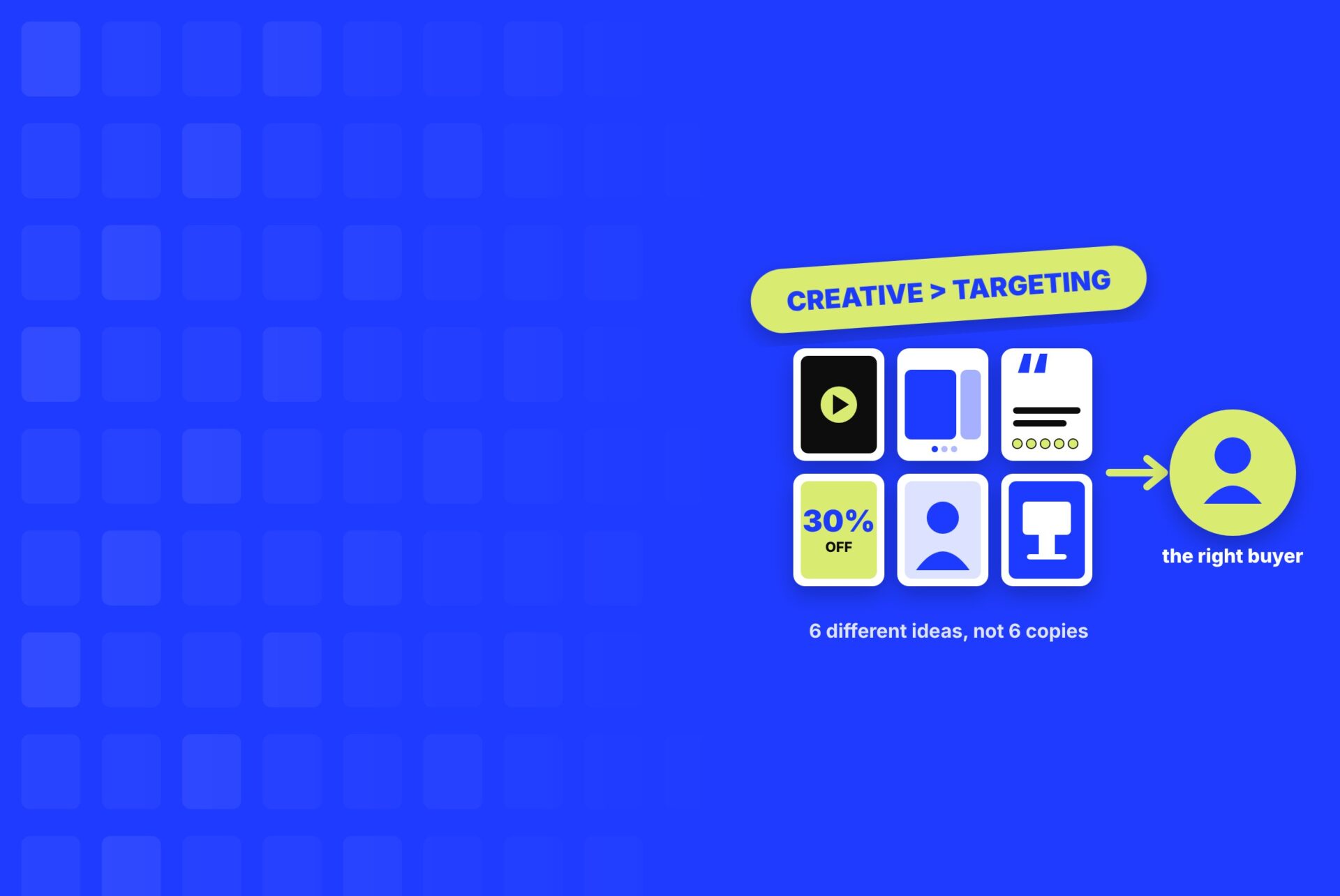
What matters for advertisers is the effect. Because retrieval can now understand far more about each ad, Meta leans on the creative (the image, video, hook, and message) to work out who an ad is for, instead of relying mainly on the audience you set. In Meta’s own words from 2025, “the focus has shifted from niche targeting to creative diversification as the best lever to find the most relevant audiences” (via Jon Loomer).
What Andromeda changed for advertisers
| The old way | The Andromeda way | |
|---|---|---|
| What finds your buyer | Your audience settings (interests, lookalikes) | Your creative: what the ad shows and says |
| Campaign structure | Many small ad sets, one audience each | Fewer, larger campaigns and ad sets with broad targeting |
| What “more ads” means | Small tweaks to one winning ad | Genuinely different concepts, formats and people |
| How you test | Headline A vs headline B | One concept vs another concept |
| Why results stall | Audience fatigue | Too many ads that look the same |
The last row is the one that catches people out. In September 2026, agency leaders told Marketing Brew that Meta’s models treat ads with the same look or the same opening hook as the same ad. One example: two videos of the same person that differ only in their on-screen text count as one creative (Relevant Audience summary). Meta’s own line was simpler: “diversify your creative, test, and let the system optimize.”
So uploading 30 versions of the same video with different captions doesn’t give the system 30 options. It gives it one.
The new “Creative diversity” column
In late August 2026, advertisers spotted a new column in Ads Manager called Creative diversity. It rates each ad set Low, Medium, or High based on how visually different its images and videos are from one another. Meta labels it “estimated and in development”. Early tests suggest it reads the visuals, so changing a headline or button doesn’t move the score (RoasHack).
To turn it on: Columns → Customize columns → search “Creative diversity”. If your main ad sets show Low, that’s your first fix.
How to build Meta campaigns for Andromeda: 7 Steps
- Consolidate. Run one campaign per goal (sales, leads, app installs) with as few ad sets as you can justify. Split campaigns only when the purpose is different, such as new customers versus retargeting, not just because the audiences are different.
- Go broad on targeting. Use Advantage+ audience or broad targeting with minimal interest stacking. Keep exclusions you really need, such as existing customers. Your creative now does the targeting.
- Build 4-6 genuinely different concepts per ad set. Each one should differ in at least two of: the angle (problem, benefit, proof, demo, offer), the format (static image, video, carousel), the person on screen, and the setting. More isn’t always better. Meta ads expert Jon Loomer warns that only big budgets can feed 20+ ads well, and a pile of weak ads drags results down.
- Feed every placement. Give each concept a vertical 9:16 version for Reels and Stories and a 4:5 or 1:1 version for feeds, and leave Advantage+ placements on. If you only supply square images, the system has fewer places to show you.
- Use Advantage+ creative enhancements, but check them. Features like text variations, image expansion, and generated backgrounds give the system more to work with. Preview what they produce, and switch off any enhancement that breaks your brand or a client’s rules.
- Test concepts, not tweaks. Change one big idea at a time and give a new concept about a week before judging it. A new headline on the same video isn’t a test; a different person telling a different story is.
- Refresh before fatigue sets in. Check the Creative diversity column and frequency weekly. When frequency climbs and results dip, add a new concept rather than another variation of the old one.
Example: One product, Five real concepts
Say you run ads for an ergonomic home-office chair. Instead of five versions of the same product shot, you might build:
| Concept | Angle | Format | On screen |
|---|---|---|---|
| Back pain at 4 p.m. | Problem | 15-second vertical video | A remote worker stretching at her desk |
| 60-second setup | Demo | Video | Hands assembling the chair |
| “My physio asked what I’d changed” | Proof | Static with review quote | Customer photo |
| Small-flat friendly | Benefit | Carousel | Chair in four small home offices |
| Free returns for 100 days | Offer | Static image | Bold text on a brand colour |
Each one speaks to a different reason to buy and looks different, which is exactly what Andromeda needs to find different buyers.
Mistakes to avoid
- Uploading lookalike variations. Ten versions of one video with different captions count as one creative. Spend that effort on a second real concept.
- Splitting budget across many tiny ad sets. Each ad set learns from less data. Consolidate first.
- Over-tight targeting. Narrow interest stacks limit who Andromeda can find for each creative.
- Judging too early. Turning ads off after a day or two cuts learning short. Give each concept about a week.
- Only square images. Missing vertical versions lock you out of Reels and Stories.
Frequently asked questions
What is Meta Andromeda? Andromeda is the machine-learning system Meta uses to pick which few thousand ads, out of tens of millions, could be shown to each person. Meta introduced it in December 2024, and it now relies heavily on your creative to decide who an ad is for.
Does targeting still matter on Meta ads? Less than it used to. Broad targeting usually works best now, with your creative doing most of the work of finding the right people. Keep exclusions and location settings that matter to your business.
How many ads should I run per ad set? Meta doesn’t give a single number. For most small and mid-size budgets, 4–6 genuinely different concepts per ad set is a sensible start. Only add more if your budget can give each one enough delivery.
What is the Creative diversity column in Ads Manager? It’s a Low, Medium, or High rating per ad set, spotted by advertisers in late August 2026, estimating how visually different your images and videos are. Meta marks it as estimated and still in development.
Do headline or text changes count as new creative? Agency leaders report that Meta treats ads with the same look or opening hook as the same ad, so text-only changes add little. Vary the visuals, the hook, and the format.
The Bottom Line
Andromeda rewards advertisers who give it real choice: several distinct ideas, in several formats, shown to a broad audience. For freelancers and small teams, that usually means fewer campaigns and a creative calendar built around new concepts, not new captions.
Working out how to keep your Facebook Page traffic flowing too? Read our breakdown of Meta One for Business and the new two-link limit.
Sources: Meta Engineering, Jon Loomer, Relevant Audience on Marketing Brew’s reporting, RoasHack.
Checked October 15, 2026.