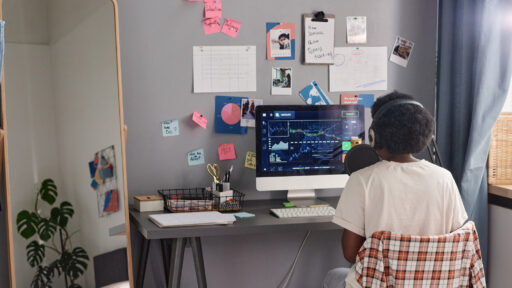
Remote work has shifted from a rare perk to a global movement. In just a few years, it has transformed how people approach careers, productivity, and lifestyle. For many, remote work represents more than simply working from home. It’s about crafting a career that aligns with personal priorities while delivering professional excellence. This shift empowers individuals to break free from rigid routines, reclaim their time, and work in ways that foster creativity.
A Look Back: Who Invented Work and How It Evolved
Before understanding the rise of remote work, it is worth exploring how work itself began. The concept of “work” dates back to early human societies, where tasks focused on survival, such as hunting, farming, and building shelter. Moreover, these foundational activities laid the groundwork for more complex social structures and economic systems that would develop over time. As civilizations grew, specialized roles emerged. The Industrial Revolution brought structured employment in factories and offices, creating the nine-to-five model that dominated the twentieth century.
For centuries, location dictated opportunity. People had to live near where they worked. As technology advanced, especially with the invention of the internet, geography stopped being a barrier. Consequently, people gained the ability to work and collaborate from virtually anywhere in the world. Remote work began quietly in the late twentieth century with a small number of telecommuters. Today, it is a central part of the modern economy, proving that work no longer has to be confined to a physical office.
Why Remote Work Became a Global Force
Remote work surged because technology matured, worker preferences shifted, and employers adapted. The pattern is now global, though it varies by region.
1. Technology and access improved fast
Cloud software, secure video calls, and team platforms removed location barriers. On average, people now work from home about 1.27 days per week worldwide. That figure comes from a 2024 to 2025 survey across 40 countries. English-speaking countries average about two days. Latin America and Africa average about one day. Many Asian countries average about half a day.
2. Workers value flexibility in real economic terms
Employees place a clear price on hybrid options. A 2024 study estimates that two remote days per week are worth about eight percent of pay, on average. This shows why remote work sticks even when office access returns.
3. Employer adoption is now mainstream
Hybrid has become the default for many large firms. Stanford researchers report that most Fortune 500 companies run hybrid schedules with two or three office days. Leaders cite retention and recruiting benefits alongside stable output.
4. Country data confirms a durable shift
In the United States, one-third of employed people worked at home on days worked in 2024. That share was similar to 2023 levels. In the United Kingdom, 28 percent of working adults used a hybrid pattern in autumn 2024. Hybrid has become the new normal for many roles.
Across the European Union, about 22 percent of workers usually worked from home in 2023. That level remains well above pre-pandemic norms. In Australia, 36 percent of employed people usually worked from home in August 2024. Managers and professionals reached 60 percent.
5. Sector and role differences explain the uneven map
Remote work concentrates in knowledge roles. In the United Kingdom, information and communication firms reported the highest hybrid use at 49 percent. Professional, scientific, and technical activities followed at 42 percent. Customer-facing and site-based sectors remained lower.
6. Demographics and lifestyle effects matter
Parents and older workers are more likely to choose a hybrid in Britain. Workers saved about 56 minutes per home working day by avoiding commuting. Many used that time for rest or exercise. These gains support well-being and focus.
7. The global baseline has stabilized, not vanished
Worldwide remote intensity eased from pandemic highs but settled at a steady level. The latest global survey shows a small decline from 1.6 days in 2022 to 1.27 days in early 2025. The plateau suggests a long-term equilibrium.
8. Why this persists into the future of remote work 2025
Workers still want choice. Firms still want wider talent pools. Digital tools keep reducing coordination costs. These forces reinforce each other. As a result, remote work continues as a durable part of modern employment rather than a temporary fix.
This shift has not only changed where people work but also how they measure success, with results taking priority over presence.
The Benefits of Remote Work You Cannot Ignore
Remote work brings advantages that go far beyond convenience. It changes how people structure their lives, spend their time, and manage their careers.
Freedom of Location:
You are no longer tied to a single city or office building. You can work from your living room, a quiet café, or a co-working space by the beach. Many professionals now combine travel with work, choosing temporary stays in cities or countries they have always wanted to explore. This location flexibility has also allowed people in smaller towns to access jobs that were once limited to big urban centers.
Time Efficiency:
The daily commute used to take hours each week. Remote work eliminates that journey, giving people back time for personal priorities. Research from multiple countries shows that remote workers save between 30 and 60 minutes each day that would otherwise be spent in traffic or on public transport. Many use this extra time for exercise, hobbies, or family connections, which can improve overall life satisfaction.
Cost Savings:
Both employees and employers benefit financially. Employees save on fuel, public transport fares, parking fees, and even lunch expenses. Employers reduce spending on large office spaces, utilities, and on-site services. For some organizations, downsizing physical office space has translated into significant yearly savings that can be reinvested in technology or employee development.
Better Focus:
Many professionals report that they can concentrate more effectively at home. Without the noise of open-plan offices or frequent in-person interruptions, workers can immerse themselves in complex tasks for longer periods. This often leads to improved quality of work and faster completion of projects. Tools like noise-cancelling headphones, dedicated work areas, and customizable lighting also help create a highly focused environment. In addition, implementing clear schedules and regular breaks can further enhance productivity and prevent burnout.
These benefits explain why remote work has become more than a quick solution during times of disruption. It has grown into a long-term preference for millions across the globe, influencing how careers are built and how companies operate.
The Future of Remote Work 2025: What Experts Predict
Industry research suggests that remote work will not only persist but become an even larger part of the global workforce. By 2025, analysts forecast that more than 32% of all employees worldwide will work remotely at least part of the week. In advanced economies, this share may exceed 40%. Hybrid and fully remote arrangements are expected to be standard practice in technology, marketing, finance, education, and other knowledge-based industries.
This growth is fueled by multiple factors. Advances in artificial intelligence and virtual collaboration are reducing the friction of working across time zones. Internet connectivity continues to improve, with global broadband penetration projected to surpass 75% by 2025. Even rural areas are gaining better access through satellite internet services, making location less of a barrier than ever.
Smarter Collaboration Tools:
Artificial intelligence will play a central role in how teams communicate and coordinate. AI-powered assistants will schedule meetings, take real-time notes, translate discussions into multiple languages, and track deadlines automatically. Analysts predict that by the end of 2025, more than half of large companies will have integrated AI meeting assistants into their daily operations.
Global Teams as the Norm:
The ability to hire talent from anywhere means companies will continue building internationally diverse teams. A recent global survey revealed that 58% of employers already have at least one remote team member working from another country. This figure is expected to grow to over 70 percent within the next two years as businesses seek specialized skills without relocation costs.
Immersive Virtual Offices:
Virtual reality and augmented reality will begin moving from experimental stages to practical use. By 2025, early adopters will host team meetings in virtual office spaces where participants can interact as avatars in shared digital environments. This technology will help mimic the presence of in-person collaboration and may improve relationship building across dispersed teams.
Greater Focus on Well-being:
As remote work matures, companies are learning that productivity depends on employee wellness. By 2025, experts predict that at least 60% of large employers will provide structured mental health support for remote workers, as well, many organizations are expected to invest in long-term wellness programs that promote emotional resilience and work-life balance. This includes access to teletherapy, online wellness programs, and stipends for home office improvements that support ergonomic comfort.
These changes indicate that the future of remote work 2025 will be more flexible, connected, and balanced than anything we have seen before. The global workforce will increasingly measure success not by hours at a desk but by results, collaboration quality, and well-being outcomes. Furthermore, this shift calls for new approaches to management and employee support that prioritize trust, autonomy, and meaningful engagement.
Setting Up Your Space: Desks That Support Remote Professionals
A well-designed workspace is essential for remote work success. The desk you choose can directly impact focus, posture, and efficiency.
1. Standing Desks
Standing desks help reduce the health risks of sitting all day. Adjustable models allow you to switch between sitting and standing with ease.
2. Compact Writing Desks
These are perfect for smaller spaces. They provide enough room for a laptop and essentials without causing clutter.
3. Desks with Storage
Ideal for remote workers who need quick access to files, notebooks, and tech gear. Storage helps maintain an organized and distraction-free space.
4. Foldable Desks
Great for multi-purpose rooms. You can fold them away after work to reclaim your living space. Choosing the right desk for your needs makes remote work more comfortable and sustainable.
Creating Focus in a Remote Work Environment
Working from home comes with distractions, from household chores to social media. Maintaining focus requires intentional effort.
- Define Work Hours and stick to consistent start and finish times.
- Use noise-cancelling headphones to create a distraction-free audio space.
- Set Clear Boundaries so household members respect your work schedule.
- Batch Similar Tasks to maintain momentum and reduce mental switching.
These strategies help remote professionals stay productive without feeling overwhelmed.
How Remote Work Supports Work-Life Balance
Remote work makes it easier to integrate professional responsibilities with personal life. You can take short breaks to recharge, spend more time with loved ones, or use midday hours for exercise.
Balance, however, requires discipline. Therefore, cultivating good habits and setting clear boundaries become essential for maintaining that balance over time. Without clear boundaries, work hours can spill into personal time. A structured daily routine ensures you benefit from flexibility without experiencing burnout.
Overcoming Remote Work Challenges
While remote work offers freedom, it is not without its obstacles.
- Isolation, which can happen without regular office interactions.
- Overworking occurs when the lack of commute leads to longer hours.
- Communication Gaps appear if teams do not maintain regular contact.
Solutions include joining virtual communities, scheduling regular check-ins, and using shared digital platforms to stay aligned and connected.
Why Companies Are Embracing Remote Work
Organizations see remote work as a competitive advantage.
- Access to Wider Talent Pools allows recruitment without geographical restrictions.
- Lower Overhead Costs from reduced need for office leases and utilities.
- Employee Retention as flexible policies often lead to higher satisfaction and loyalty.
These benefits make remote work a strategic decision rather than a simple employee benefit. As a result, companies that embrace remote work often gain a competitive edge in attracting and retaining top talent.
Remote Work and the Future of Careers
The remote work revolution is influencing career choices worldwide. More people are prioritizing roles that allow flexibility and location independence. Digital skills, adaptability, and self-management are becoming essential for long-term career success.
The future of remote work 2025 and beyond will belong to those who can combine technical expertise with the ability to work independently. As more companies embrace this model, professionals will have greater freedom to design careers that align with their ideal lifestyle.

Final Thoughts
Remote work is no longer just an alternative. It is a cornerstone of modern employment. From its historical roots in the evolution of work to its bright future in 2025, it represents a shift toward greater freedom, focus, and flexibility.
Whether you are setting up your home office, creating hybrid policies for your business, or simply curious about who invented work and how it evolved, the remote work revolution offers a chance to rethink what is possible. With the right tools, boundaries, and mindset, remote work can help you achieve more while enjoying a balanced and fulfilling life.
Subscribe to What Works Next today and join a community dedicated to transforming the way we work. Working smarter starts here!